 Save
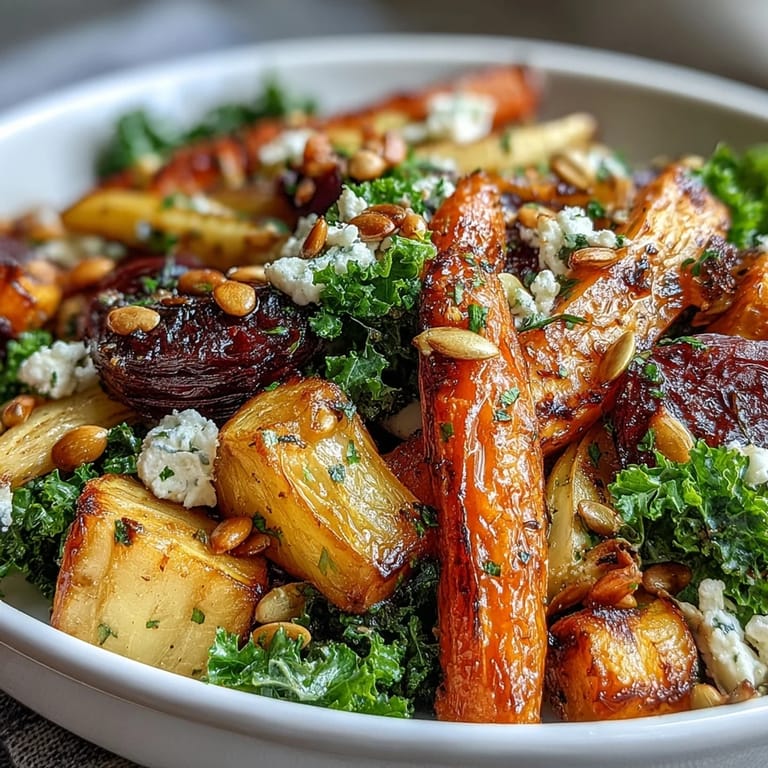
Save Last January, I found myself staring at a farmers market haul of root vegetables with no real plan, just a vague desire to eat something that felt warming and substantial. A woman beside me at the checkout mentioned she roasts everything together, tosses it with bitter greens, and finishes with a hot dressing that makes the whole bowl come alive. That conversation stuck with me through the winter, and now this bowl is what I reach for on those gray afternoons when the kitchen needs to feel a little less lonely.
I made this for my sister on a Sunday afternoon when she was going through a rough patch, and she sat at my kitchen counter eating directly from the serving bowl while telling me about her week. The warmth of it seemed to matter as much as the flavor, and she's asked me to make it every time she visits since.
Ingredients
- Carrots: Choose ones with good color and firmness, as they hold their shape beautifully when roasted and develop a natural sweetness that balances the earthiness.
- Parsnips: These often get overlooked but become creamy and subtly sweet in the oven—they're the secret ingredient that makes people ask what you did differently.
- Sweet potato: Cut it into similar-sized pieces as the other vegetables so everything finishes cooking at the same moment, preventing some pieces from drying out.
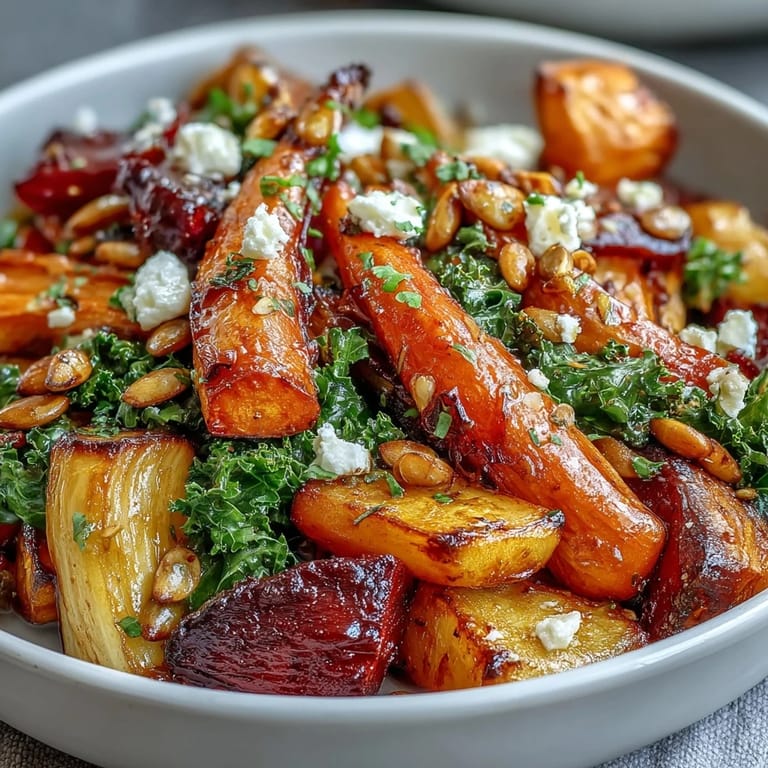
- Beet: The earthiness grounds the whole bowl and its deep color makes every serving look intentional and beautiful.
- Olive oil: Use your everyday oil for roasting and reserve any nicer bottle for the warm dressing where you'll actually taste its character.
- Kosher salt and black pepper: These aren't afterthoughts—they're what draw out and deepen the natural flavors of the vegetables as they caramelize.
- Dried thyme: This herb is key; it adds an herbaceous note that keeps the bowl from feeling one-dimensional or overly sweet.
- Curly kale: The sturdy texture stands up to massage and warm dressing without becoming mushy, unlike more delicate greens.
- Apple cider vinegar: The tanginess is essential; it cuts through the richness and prevents the bowl from feeling heavy.
- Dijon mustard: A small amount adds depth and helps emulsify the dressing so it clings to every vegetable.
- Honey or maple syrup: Just enough to balance the acid without making this sweet—you're looking for harmony, not dessert.
- Shallot: Minced and warmed through, it becomes almost mellow and sweet rather than harsh and raw.
- Pumpkin seeds: Toasted varieties have better flavor and crunch; buy them already toasted if you want one less step.
- Feta cheese: The creamy saltiness is the final touch that makes you want another bite, though it's easily omitted for vegan versions.
Tired of Takeout? 🥡
Get 10 meals you can make faster than delivery arrives. Seriously.
One email. No spam. Unsubscribe anytime.
Instructions
- Set up your oven and prep:
- Get your oven to 425°F and line a baking sheet with parchment paper so cleanup is less of a chore later. This temperature is hot enough to create caramelization but not so intense that things burn before they soften.
- Toss and season the root vegetables:
- Cut all your vegetables into roughly 1-inch pieces so they cook evenly, then toss them together in a bowl with olive oil, salt, pepper, and thyme until every piece is lightly coated. Spread them out on the baking sheet in a single layer rather than piling them up, which allows them to roast rather than steam.
- Roast until caramelized:
- Let them go for 30 to 35 minutes, stirring halfway through so the pieces that were on the bottom get their turn at the hot baking sheet. You're looking for golden-brown edges and a fork-tender center, which is when you know they're done.
- Massage and prepare the kale:
- While vegetables roast, tear your kale into bite-sized pieces and massage it with a tablespoon of olive oil and a pinch of salt using your hands until it darkens slightly and becomes more pliable. This step transforms raw kale from tough to tender and is honestly one of the most satisfying kitchen tasks.
- Build the warm dressing:
- Heat olive oil in a small skillet over medium heat, add your minced shallot, and let it soften for about 2 minutes until it's fragrant and just starting to turn golden. Whisk in the vinegar, mustard, and honey until everything is combined and smooth, then taste and adjust salt and pepper—remember that warm dressing should be bold since it's seasoning the whole bowl.
- Assemble the bowls:
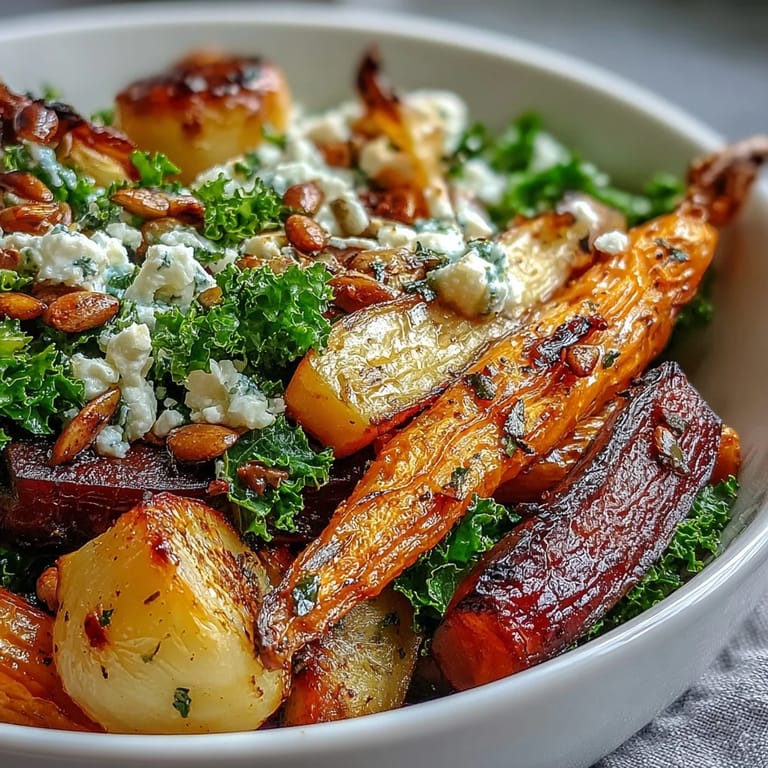
- Divide your massaged kale among four bowls, creating a bed for the roasted vegetables to sit on. Top with the warm vegetables, drizzle generously with the warm dressing while it's still hot, then finish with pumpkin seeds and feta cheese and serve right away.
 Save
Save My neighbor borrowed this recipe last fall and came back three weeks later to tell me she'd made it for a dinner party and everyone asked for the recipe. Watching something I'd discovered almost by accident become something other people return to is a quiet kind of joy.
Why the Warm Dressing Changes Everything
A cold dressing would leave this bowl feeling disjointed, but the warm dressing does something almost magical—it softens the kale just slightly, clings to every roasted piece, and the residual heat makes the whole bowl feel comforting rather than just healthy. The first time I heated the dressing was actually an accident; I'd left it on the stove while finishing other tasks, and when I tasted it warm, I immediately understood why it works. The flavors become brighter and rounder simultaneously, which is the kind of small shift that separates a recipe from a genuine discovery.
Customizing Without Losing the Plot
The beauty of this bowl is that it genuinely adapts without becoming unrecognizable. Swap the kale for tender chard or even baby spinach if that's what you have, or add cooked grains like quinoa or farro if you want something more filling. I've made versions with different root vegetables depending on what looked good at the market—parsnips aren't mandatory, and neither is the beet, though I do think the beet adds something visually striking and flavor-wise complex.
Storing and Reheating Without Regret
This bowl actually improves after a day or two in the refrigerator because the flavors meld and the kale continues softening, which sounds strange but tastes wonderful. If you're making it ahead, keep the warm dressing separate and reheat it gently before pouring over the cold vegetables and greens, or simply dress individual portions as you eat them. The toppings—seeds and cheese—are best added right before serving to maintain their texture and impact.
- Store roasted vegetables and massaged kale in separate containers so you can mix and match or make different bowls throughout the week.
- The warm dressing keeps for five days refrigerated and reheats beautifully in a small skillet over low heat.
- This bowl reheats well if you warm the vegetables gently and serve with fresh toppings, making it a genuinely practical weeknight dinner option.
 Save
Save This bowl taught me that winter cooking doesn't have to feel heavy or resigned—it can taste like intention and care. It's become the recipe I return to when I need to feed myself or someone else something that feels both nourishing and thoughtful.
Recipe FAQs
- → What vegetables work best in this bowl?
Carrots, parsnips, sweet potato, and beets are ideal because they roast at similar rates and develop natural sweetness. You can also add rutabaga, turnips, or winter squash based on preference.
- → Why massage the kale?
Massaging kale with olive oil and salt breaks down tough fibers, making it tender and easier to eat. This simple step transforms raw kale into a soft, silky base that complements the roasted vegetables.
- → Can I make this vegan?
Absolutely. Simply omit the feta cheese or replace it with a plant-based alternative. The remaining ingredients are naturally vegan, including the maple-sweetened dressing.
- → How do I store leftovers?
Store components separately in airtight containers. Roasted vegetables keep for 4-5 days, while massaged kale lasts 3-4 days. Add the dressing and toppings just before serving for best texture.
- → What can I add for more protein?
Consider adding cooked quinoa, brown rice, or chickpeas directly into the bowl. Sliced avocado, roasted chickpeas, or hemp seeds also work well as protein-rich toppings.
- → Can I use a different green?
Baby spinach or Swiss chard make excellent alternatives to kale. Spinach requires no prep, while chard benefits from a quick sauté or massage similar to kale.