 Save
Save My college roommate Sarah and I discovered fried chicken entirely by accident one rainy Friday night. We had nothing but buttermilk leftover from a failed pancake attempt and some chicken thighs that needed cooking. The resulting mess in our tiny kitchen somehow taught us more about crispy coatings than any cookbook ever could.
Last summer, my nephew accidentally knocked over my spice rack while helping with the coating. We laughed so hard watching him try to remember which spices went where, but that slightly chaotic batch turned out better than any perfectly measured attempt before or since.
Ingredients
- Chicken pieces with skin: The skin is where all the crispy magic happens so do not let anyone talk you into boneless skinless breasts
- Buttermilk: This tangy marinade tenderizes the meat and creates the perfect base for the flour to cling to
- Flour and spices: The smoked paprika and thyme combination gives that classic flavor that makes people ask what your secret ingredient is
- Vegetable oil: You need enough oil so the chicken floats freely without touching the bottom
Tired of Takeout? 🥡
Get 10 meals you can make faster than delivery arrives. Seriously.
One email. No spam. Unsubscribe anytime.
Instructions
- Marinate the chicken:
- Combine buttermilk with salt and spices in a large bowl then submerge each piece of chicken until thoroughly coated. Let it soak in the refrigerator for at least two hours though overnight is even better for deep flavor penetration.
- Prepare the coating station:
- Whisk together the flour with garlic powder onion powder dried thyme smoked paprika and black pepper in a separate large bowl. Get this ready before you touch the chicken so you can work efficiently once the coating process starts.
- Dredge each piece:
- Lift chicken from the marinade letting excess drip off briefly then press it firmly into the flour mixture. Really work the flour into every crevice and fold because thick well-adhered coating is what makes restaurant-quality fried chicken.
- Rest before frying:
- Set coated pieces on a wire rack for ten minutes while the oil heats up. This resting period helps the coating set so it will not slide off during frying which is a mistake I made plenty of times before learning better.
- Heat the oil properly:
- Bring your oil to 175°C (350°F) and maintain this temperature throughout cooking. If the oil is not hot enough the chicken will absorb too much fat and if it is too hot the outside will burn before the inside cooks through.
- Fry in batches:
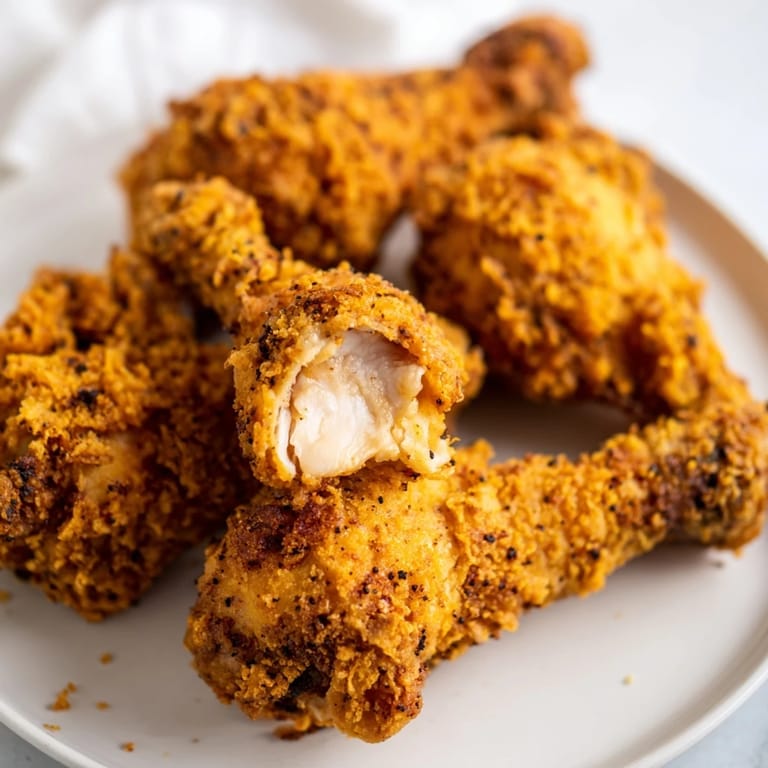
- Carefully lower chicken pieces into the hot oil leaving plenty of space between them so the temperature does not drop too much. Turn them occasionally as they cook for about twelve to fifteen minutes until they are deep golden brown and reach an internal temperature of 75°C (165°F).
- Rest and serve:
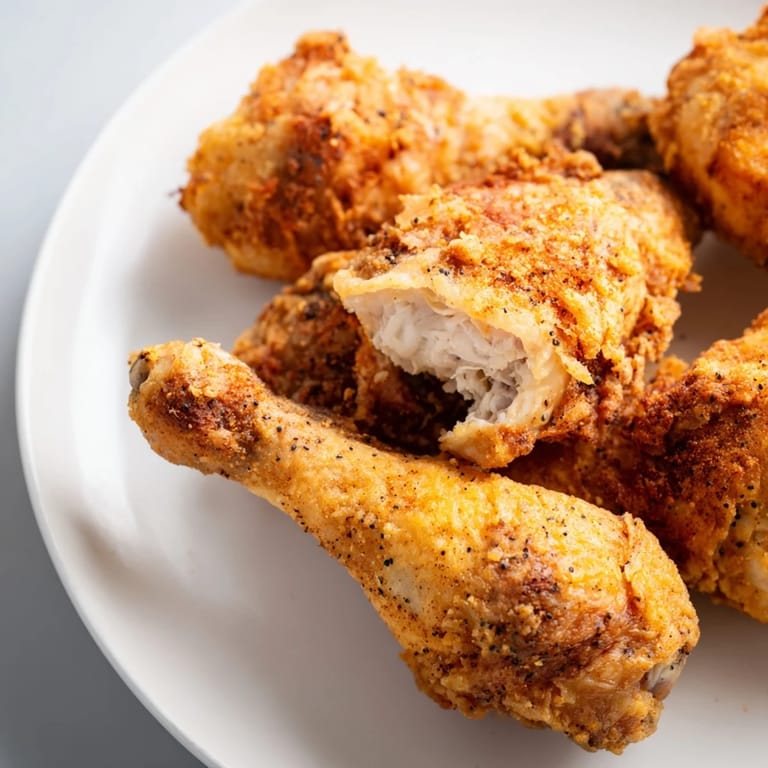
- Let the finished chicken drain on a wire rack for five minutes before serving. This crucial resting period allows the coating to reach maximum crispiness and lets the juices redistribute throughout the meat.
 Save
Save My dad still talks about the Sunday I finally got this recipe right after months of experimenting. He sat at the kitchen table just watching me work and when he took that first bite he closed his eyes and said Now that is what I have been waiting forty years to taste.
Getting That Perfect Crisp
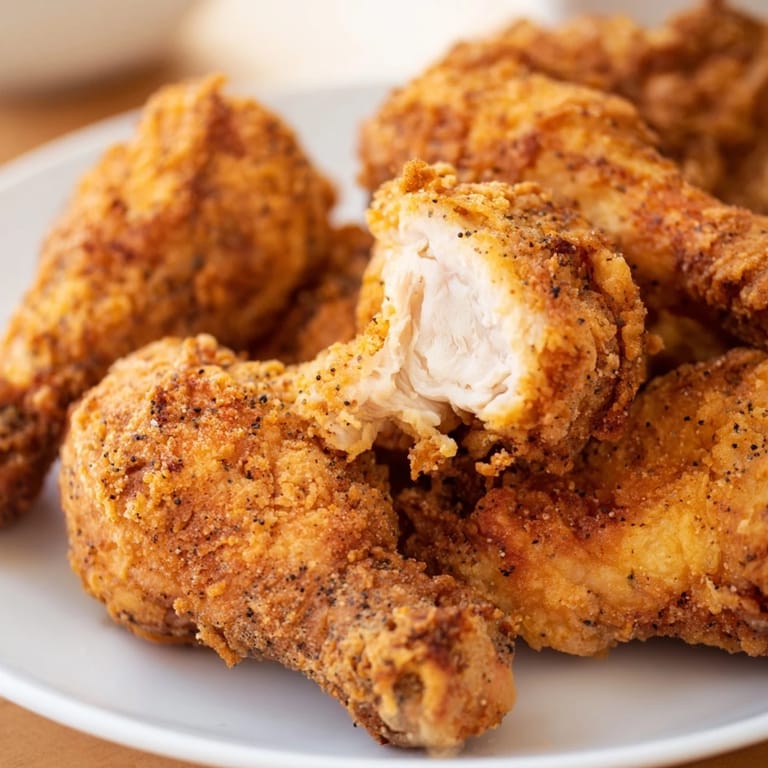
The wire rack resting step is non-negotiable if you want serious crunch. I used to skip it out of impatience but those extra ten minutes are what transform good fried chicken into the kind people drive across town for.
Temperature Control Matters
Keep an eye on your oil temperature between batches because adding cold chicken makes the heat drop significantly. A good thermometer costs less than one takeout order and will save you from countless disappointing meals.
Serving It Up Right
Hot sauce is essential but creamy coleslaw cuts through the richness beautifully. Let everyone add their own heat level because nothing beats watching someone customize their perfect bite.
- Have extra napkins ready because this is definitely finger food
- Serve immediately while the coating is at maximum crunchiness
- Save leftovers for sandwiches the next day if you somehow have any remaining
 Save
Save There is something wonderfully communal about making fried chicken that brings people into the kitchen like nothing else I cook. Watch how quickly the house fills with people who just happened to be in the neighborhood.
Recipe FAQs
- → How long should chicken marinate in buttermilk?
Marinate chicken for at least 2 hours, though overnight is ideal. The buttermilk tenderizes the meat and helps the coating adhere better while infusing flavor throughout.
- → What's the best oil temperature for frying?
Maintain oil at 175°C (350°F). Use a kitchen thermometer to monitor temperature, as oil that's too cool makes greasy chicken while too hot burns the exterior before the interior cooks.
- → How do I get extra crispy coating?
Let coated chicken rest for 10 minutes before frying. For maximum crunch, double-dip by coating in flour, dipping again in buttermilk, then recoating with flour mixture.
- → Can I use boneless chicken pieces?
Yes, boneless pieces work well. Reduce frying time to 8–10 minutes since boneless cuts cook faster. Monitor internal temperature to avoid overcooking.
- → What's the best way to drain fried chicken?
Place chicken on a wire rack over a baking sheet. This allows air circulation and keeps pieces crispy without trapping oil like paper towels can.