 Save
Save There's something about the golden hue of turmeric that makes me want to slow down and cook with intention. I discovered this soup on a gray afternoon when my neighbor mentioned she'd been fighting a cold, and I remembered my grandmother's approach to remedies—not fussy supplements, but real food simmered low and slow. The first time I made this, the house filled with this warm, peppery-sweet aroma that felt like an embrace, and somehow it seemed to do more than just taste good.
I made this for my partner during a particularly hectic work week, and watching them have a second bowl without being asked told me everything. They described it as 'the kind of soup that makes you feel less tired,' which is maybe the highest compliment soup can receive. It became our go-to when the weather turns or whenever we need reminding that simple food can be profoundly comforting.
Ingredients
- Boneless, skinless chicken breasts: Dice them into bite-sized pieces so they cook through quickly and distribute evenly throughout the broth—I learned the hard way that large chunks take forever and make the soup feel less unified.
- Pearl barley: Rinse it well under cold water before adding; this removes the excess starch and keeps the broth from becoming gluey, which is the difference between silky and muddy.
- Carrots, celery, and onion: These are your flavor foundation, and taking two minutes to dice them evenly means they cook at the same pace and create that classic mirepoix sweetness.
- Garlic: Mince it fine so it melts into the broth rather than creating tough little pieces—I use the side of my knife to crush it slightly before chopping for maximum release of flavor.
- Zucchini: Add it later in cooking so it stays tender and doesn't turn into mush; it should have a gentle presence, not disappear into the background.
- Baby spinach: Stir it in at the very end—it wilts in seconds and retains its bright color and nutrition this way.
- Low-sodium chicken broth: This matters because you're building layers of flavor with spices, and a heavily salted broth will make everything taste one-note.
- Olive oil: Use a good quality one, not because you need to be fancy, but because you'll taste it in the initial sauté and it sets the tone.
- Ground turmeric: This is the star—warm, earthy, with a slight bitterness that makes everything taste more intentional.
- Cumin and coriander: These two together create a subtle warmth without heat, almost like the soup is wrapping you in something safe and familiar.
- Bay leaf: Don't skip it and don't forget to remove it—it adds a quiet depth that's hard to name but noticeable when it's missing.
- Lemon juice: Added at the end to brighten everything and cut through the earthiness of the turmeric with a gentle lift.
- Fresh parsley: A small handful chopped over the top feels ceremonial and adds a bit of color and freshness.
Tired of Takeout? 🥡
Get 10 meals you can make faster than delivery arrives. Seriously.
One email. No spam. Unsubscribe anytime.
Instructions
- Build your base with heat and patience:
- Warm the olive oil in your pot over medium heat, then add the onion, carrots, and celery. Let them soften for about five minutes—you're not rushing this part, you're waking them up, and you'll know it's right when the onion becomes translucent and the kitchen starts to smell like home cooking.
- Awaken the spices:
- Once the vegetables are soft, stir in the garlic, turmeric, cumin, coriander, and black pepper. Cook for just one minute while stirring constantly—this is the moment the spices release their oils and the aroma shifts from pleasant to intoxicating.
- Introduce the chicken:
- Add your diced chicken and stir everything together. Cook for about three minutes, just until the chicken loses its raw appearance and picks up a light golden color on the edges—it doesn't need to be cooked through here, the broth will finish that job.
- Bring it all together with broth and grain:
- Pour in your chicken broth and add the rinsed pearl barley and bay leaf. Bring everything to a boil, then immediately lower the heat to a gentle simmer and let it cook uncovered for thirty-five minutes. This is the moment where you can step back, maybe drink some tea, and let the kitchen fill with warmth.
- Add the finishing vegetables:
- After thirty-five minutes, the barley should be tender and the chicken fully cooked. Stir in your diced zucchini and simmer for another ten minutes so it becomes soft but not mushy.
- Finish with greens and brightness:
- Stir in the spinach and watch it soften in seconds. Add lemon juice and taste for salt—season to your preference, and don't forget to fish out that bay leaf before serving.
- Serve with intention:
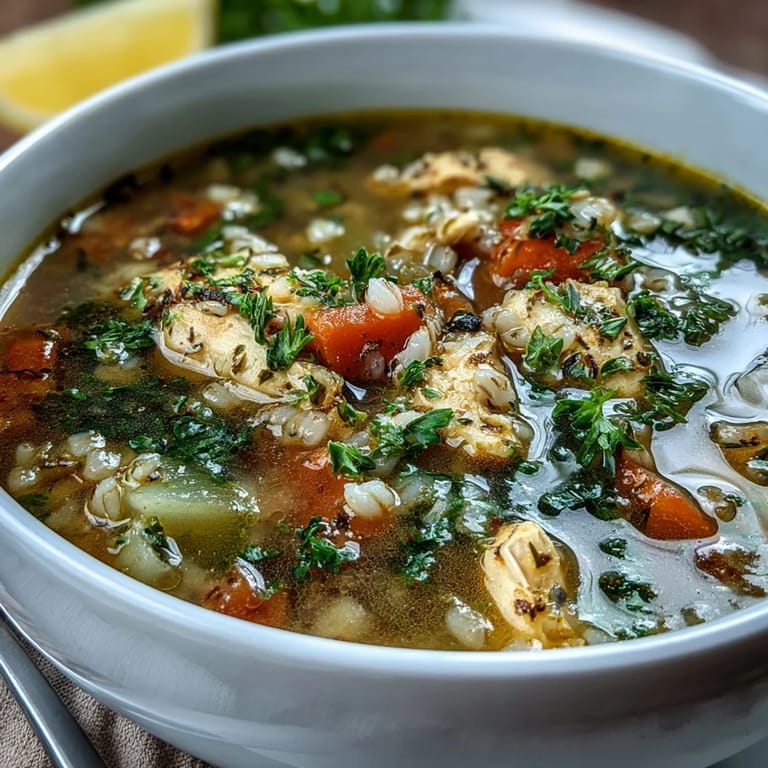
- Ladle into bowls and top with a shower of fresh parsley. This moment, when someone's about to taste what you've made, is worth savoring.
 Save
Save What strikes me most about this soup is how it manages to be both deeply nourishing and completely uncomplicated—no complicated techniques, no ingredients you have to hunt for, just honest cooking. It's become the kind of recipe I reach for when I want to make someone feel seen, whether they're sick or just tired or in need of something warm.
Variations and Adaptations
I've made this soup at least a dozen different ways, and it's surprisingly forgiving. A vegetarian friend asked me to create a version with chickpeas instead of chicken and vegetable broth, and honestly, it might be my favorite variation now—the chickpeas have a subtle nuttiness that plays beautifully with the turmeric and spices. You could also swap the pearl barley for farro if you prefer a slightly chewier grain, though you'll want to reduce the cooking time by about ten minutes. One winter, I added a pinch of chili flakes and discovered the soup gains a gentle warmth without becoming spicy, which changed how I think about layering heat into comfort food.
What to Serve Alongside
This soup wants companionship—it's generous enough to be a complete meal, but it truly sings when served with something to complement it. Warm, crusty bread is the obvious choice, something you can use to soak up the last spoonfuls of broth. I've also served it alongside a simple green salad with a bright vinaigrette, which provides a nice textural contrast to the soup's creaminess. If you want to be a bit more generous, a warm flatbread works beautifully, or even rice if you want to make it heartier.
Storage and Reheating
This soup actually improves as it sits—the flavors marry and deepen overnight, so making it a day ahead is not just convenient, it's smart. It keeps in the refrigerator for up to four days and freezes beautifully for up to three months, though I'd recommend adding the spinach fresh when you reheat rather than freezing it in. When you're ready to eat it, gently reheat over medium heat, stirring occasionally, and add a splash of broth or water if it's thickened too much.
- Cool the soup completely before storing to avoid condensation and unpleasant flavors developing.
- Reheat gently rather than at a rolling boil so the barley doesn't break down further and turn grainy.
- Garnish with fresh parsley just before serving to restore some brightness and texture to the final bowl.
 Save
Save Making this soup is an act of care, whether you're caring for someone else or yourself. It's the kind of recipe that reminds us why we cook at all.
Recipe FAQs
- → Can I make this soup vegetarian?
Yes, simply substitute chicken with chickpeas and use vegetable broth instead of chicken broth for a delicious vegetarian version.
- → Can I use other grains instead of pearl barley?
Absolutely. Farro or brown rice work well—just adjust cooking time as needed since these grains may cook faster or slower than barley.
- → How long does this soup keep in the refrigerator?
This soup stores beautifully for up to 4 days in an airtight container. The barley will continue to absorb liquid, so you may need to add more broth when reheating.
- → Can I freeze this soup?
Yes, it freezes well for up to 3 months. The barley may soften slightly upon thawing, but the flavors remain delicious. Thaw overnight in the refrigerator before reheating.
- → What can I serve with this soup?
Warm crusty bread makes the perfect accompaniment. You could also serve with a simple green salad or crackers for a complete meal.