 Save
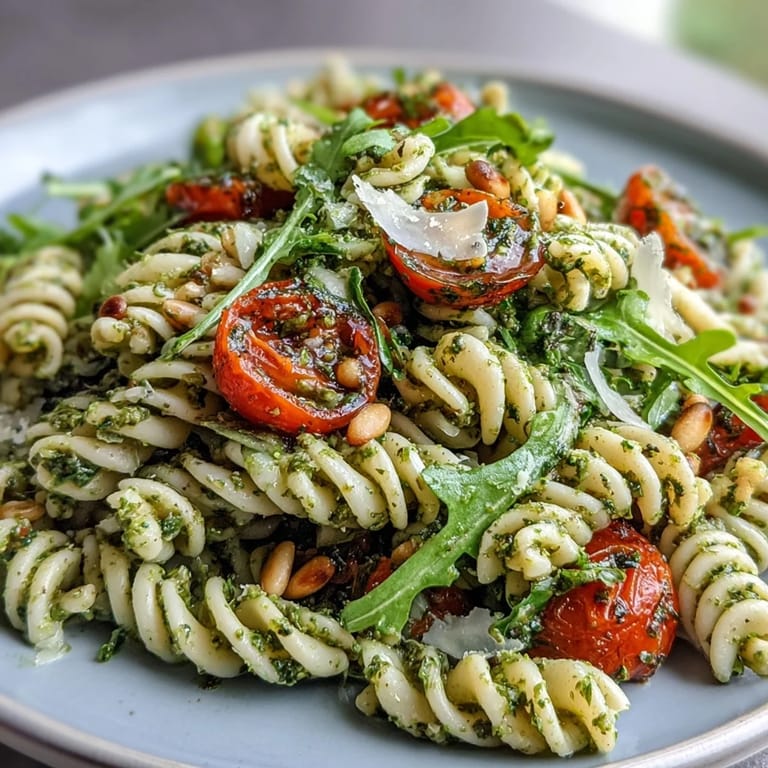
Save Last summer, my neighbor knocked on the door with a basket of basil so overgrown it was practically attacking her fence. I stood there holding this fragrant bundle, already sweating in the afternoon heat, and thought: pasta salad. Not just any pasta salad—the kind where you make pesto from scratch and actually taste every single leaf. That afternoon changed how I think about simple food.
My friend Sarah brought this to a beach day once, and I watched people go back for thirds without even realizing they were eating vegetables. The cherry tomatoes were still warm from the sun, the pesto clung to every twisted spiral of pasta, and somehow the whole thing felt both elegant and completely casual. That's when I knew this recipe had staying power.
Ingredients
- Short pasta (fusilli, penne, or farfalle), 300 g: The curves and ridges catch the pesto and tomato juice, so skip the straight noodles—they'll just slide right off your fork.
- Fresh basil leaves, 50 g: Pick them from the top of the plant where they're tender and aromatic; those bottom leaves taste faintly like regret.
- Pine nuts, 40 g (lightly toasted): Toasting them yourself takes three minutes and transforms them from bland to buttery; store-bought roasted saves time if you're in a rush.
- Garlic clove, 1: One clove is genuinely enough—pesto isn't a vampire deterrent, it's a celebration of basil.
- Parmesan cheese, 50 g grated (plus 30 g shavings for garnish): Buy a wedge and grate it yourself; pre-grated stuff has anti-caking agents that make the pesto feel grainy.
- Extra virgin olive oil, 100 ml: This is where quality matters—a grassy, peppery oil makes the whole thing sing.
- Cherry tomatoes, 250 g (halved): Summer tomatoes are non-negotiable; winter ones will make you sad.
- Baby arugula, 50 g (optional): It adds a peppery edge that makes your mouth wake up.
- Lemon zest, from 1 lemon: The brightness cuts through the richness in a way that feels almost shocking.
- Salt and freshly ground black pepper: Taste as you go—seasoning is personal.
Tired of Takeout? 🥡
Get 10 meals you can make faster than delivery arrives. Seriously.
One email. No spam. Unsubscribe anytime.
Instructions
- Boil the pasta until it's exactly al dente:
- Salt your water generously—it should taste like the sea. When the pasta is still slightly firm to the bite, drain it immediately and run it under cold water while tossing gently so it doesn't clump.
- Make the pesto while the pasta cools:
- Combine basil, toasted pine nuts, garlic, and grated parmesan in a food processor and pulse until everything is finely chopped but not yet a paste. Then, with the processor running, drizzle in the olive oil slowly—this emulsifies it and keeps the texture silky instead of oily.
- Bring it all together in a bowl:
- Toss the cooled pasta with the cherry tomatoes and arugula, then add the pesto and mix thoroughly so every strand gets coated. If it feels tight, loosen it with a splash more oil.
- Taste and adjust like you're cooking for someone you love:
- Season with salt, pepper, and a squeeze of lemon juice—the acid is your best friend here. This is the moment where your palate takes over from the recipe.
- Plate it and let it breathe:
- Transfer to a serving platter, scatter parmesan shavings and lemon zest across the top, and serve immediately while everything is still vibrant. If you need to chill it, wait no longer than two hours or the basil will darken.
 Save
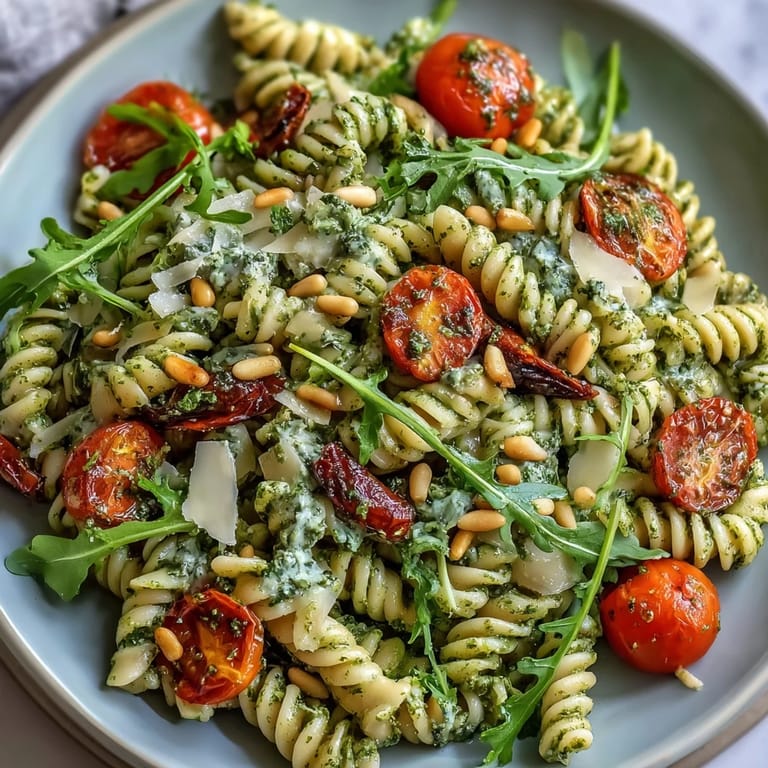
Save My mom served this at my graduation lunch, and my teenage cousin actually put his phone down and ate in silence. Later he asked for the recipe, which from him felt like a marriage proposal. That moment taught me that food doesn't need to be complicated to matter.
The Basil Question
Not all basil is created equal, and yes, it matters. Thai basil is sharper, African blue has a faint anise note, and regular sweet basil—the kind that grows in every Italian grandmother's kitchen—is your answer here. Pick it in the morning when the oils are strongest, and if you have to buy it from a store, sniff it first like you're making a life decision. Fresh should smell alive and bright, not tired and brown.
Making Pesto the Right Way
There's a reason traditional pesto is made with a mortar and pestle—it bruises the herbs less and keeps them vibrant green. A food processor is faster and totally acceptable, but if you have the patience, the manual method yields a noticeably fresher flavor. The key either way is to add the oil gradually while blending, which prevents the sauce from becoming a greasy puddle. Think of it like coaxing the basil and oil into a partnership rather than forcing them together.
Timing and Storage Wisdom
This dish is a shape-shifter—you can eat it immediately while it's bright and crisp, or chill it for up to two hours and it becomes something deeper and more integrated. Don't refrigerate longer than that or you'll watch the basil fade to an olive-drab color that's still fine to eat but visually disappointing. If you're making this ahead, keep the pesto separate from the pasta until the last possible moment, then assemble at the picnic or just before serving.
- Toast your pine nuts in a dry skillet for exactly three minutes, shaking constantly so they go golden but not bitter.
- Zest your lemon before you slice it, not after—you need the intact fruit for a better grip.
- Taste the pesto before it meets the pasta so you can adjust the seasoning without second-guessing yourself.
 Save
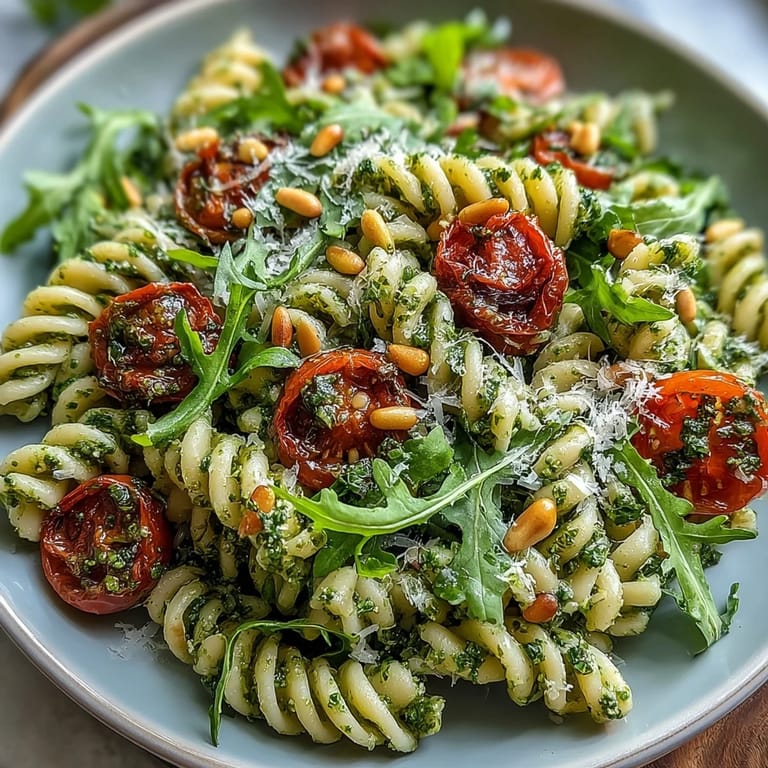
Save This pasta salad tastes like the exact moment summer peaks—when the sun is warm but not brutal, when you have people gathered around, and when basil is so abundant you almost don't know what to do with it. Make it.
Recipe FAQs
- → What pasta types work best for this dish?
Short pasta shapes like fusilli, penne, or farfalle hold the pesto well and provide good texture contrasts.
- → Can the pesto be made in advance?
Yes, homemade pesto can be prepared ahead and stored in the refrigerator covered with a thin layer of olive oil to preserve freshness.
- → How can I add protein to this dish?
Grilled chicken, roasted zucchini, or black olives complement the flavors and add protein without overpowering the freshness.
- → Are there suitable substitutions for pine nuts?
Walnuts or almonds can replace pine nuts to achieve a slightly different but still rich and nutty pesto flavor.
- → What is the best way to serve this pasta mixture?
Serve chilled or at room temperature, garnished with parmesan shavings and lemon zest for an aromatic finish.