 Save
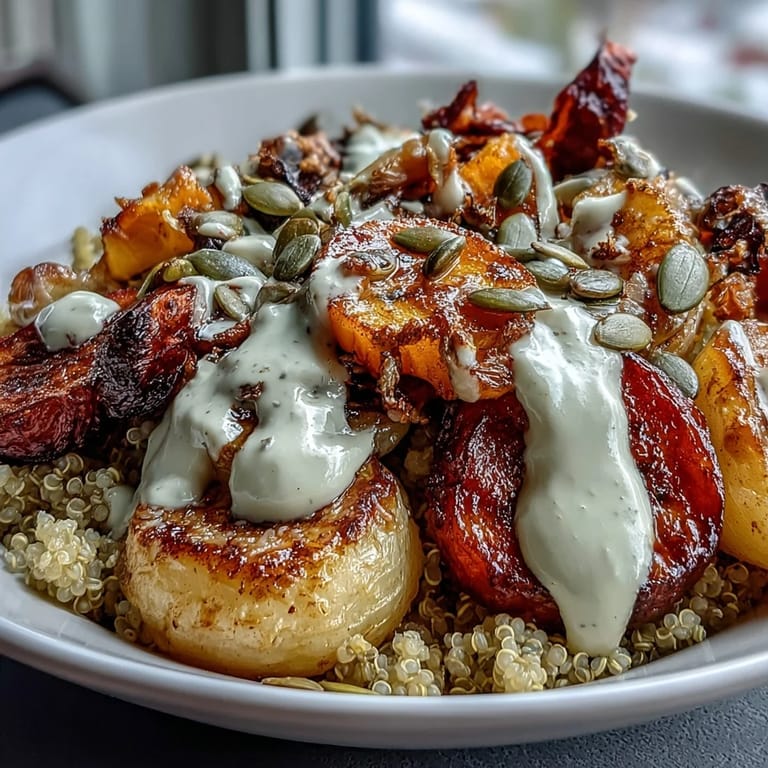
Save There's something almost meditative about chopping root vegetables on a quiet afternoon—the way beets stain your fingertips like watercolor, how a parsnip's sweetness surprises you mid-slice. This roasted root vegetable bowl came together one chilly autumn when I wanted something that felt both grounding and celebratory, without fussing over a hot stove for hours. The caramelized edges, the fluffy quinoa, that silky tahini sauce—it all happens in less than an hour, and somehow tastes like you've been cooking all day.
I made this for my partner after a long week, and the way they closed their eyes on that first bite—just leaning into the flavors—reminded me why I cook at all. We ate in almost complete silence except for the clink of spoons and the occasional "this is so good" whispered between bites.
Ingredients
- Carrots: Their natural sugars caramelize beautifully in high heat, turning sweet and slightly crispy at the edges—peel them fresh if you can.
- Beets: These bleed their earthy richness into every corner of the bowl, so don't skip them even if you're not usually a beet person.
- Turnips: Mild and creamy when roasted, they absorb the olive oil and herbs like little flavor sponges.
- Parsnips: The secret ingredient nobody expects—they get almost candy-like as they soften, adding unexpected depth.
- Olive oil: Use something you'd actually taste on its own; it's a main player here, not just a cooking medium.
- Sea salt and black pepper: Simple, but freshly ground pepper makes a real difference in how the dish finishes.
- Dried thyme or rosemary: Optional, but they whisper herbal notes that tie everything together without shouting.
- Quinoa: Rinse it thoroughly under cold water first—this removes the bitter coating and makes all the difference in taste.
- Water or vegetable broth: Broth adds subtle flavor that plain water can't match, and it's worth the swap.
- Tahini: The creamy anchor of the whole bowl, so get quality stuff if you can—there's nowhere to hide if it's not good.
- Lemon juice: Bright and essential for cutting through the richness of tahini, making each spoonful feel balanced.
- Garlic: Just one clove, minced fine, so it whispers rather than shouts at the back of your throat.
- Maple syrup or honey: A tiny touch of sweetness softens the tahini's earthiness and creates a subtle harmony.
- Fresh parsley and seeds: Parsley adds a fresh green note at the end, while seeds bring crunch that the whole bowl needs.
Tired of Takeout? 🥡
Get 10 meals you can make faster than delivery arrives. Seriously.
One email. No spam. Unsubscribe anytime.
Instructions
- Get Your Oven Ready:
- Heat it to 425°F and line your baking sheet with parchment paper—this small step means you're not scrubbing roasted vegetable bits later. Trust me on this one.
- Prepare and Season Your Vegetables:
- Cut everything into roughly 1-inch pieces so they cook evenly, then toss them with olive oil, salt, pepper, and herbs in a large bowl. Make sure every piece gets a light coating of oil.
- Roast Until Golden:
- Spread them in a single layer on your baking sheet and let them roast for 30 to 35 minutes, giving them a gentle stir halfway through. You're looking for golden-brown edges and vegetables that yield when you pierce them with a fork.
- Cook Your Quinoa:
- While the vegetables roast, bring quinoa, water or broth, and salt to a boil in a medium saucepan. Once boiling, lower the heat, cover, and let it simmer gently for 15 minutes, then remove from heat and let it sit covered for 5 more minutes before fluffing with a fork.
- Whisk Your Tahini Sauce:
- In a small bowl, whisk together tahini, lemon juice, water, minced garlic, salt, and maple syrup if using until smooth and creamy. If it's too thick, add water a tablespoon at a time until you reach a pourable consistency that coats the back of a spoon.
- Assemble and Serve:
- Divide the fluffy quinoa among four bowls, top with your roasted vegetables, drizzle generously with tahini sauce, and finish with a scattered handful of fresh parsley and seeds. Taste and adjust seasoning as you go.
 Save
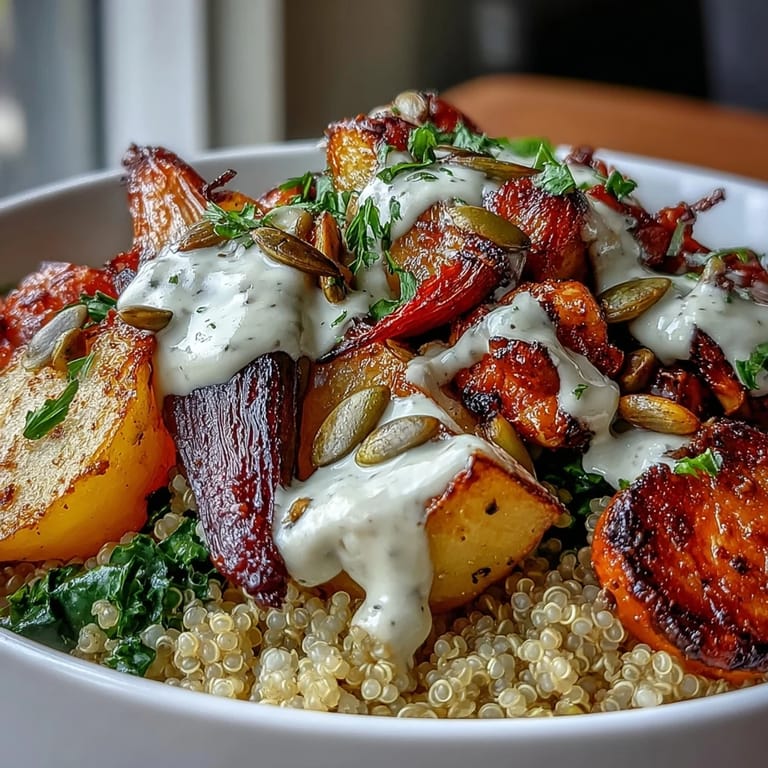
Save There's a moment when everything comes together in the bowl—when you drizzle that creamy sauce over the warm vegetables and watch it pool in the small valleys—where you realize how something so simple can feel luxurious. That's when this stops being dinner and becomes a small act of self-care.
The Magic of Roasting
Roasting transforms root vegetables from humble to magnificent, but it only works if your oven is hot enough and your vegetables are truly dry before they hit the sheet. I learned this the hard way when I got impatient and roasted at 375°F, which turned my beautiful vegetables into steamed sadness. The high heat creates what restaurants call the Maillard reaction—it's chemistry that turns simple carbs into complex, caramelized sweetness that can't be rushed.
Tahini as a Foundation
Tahini is often treated like a backup player, but in this bowl it's the lead. The lemon juice and garlic wake it up from its earthiness, while the maple syrup smooths its corners, creating a sauce that's simultaneously rich and bright. If your tahini seems separated with oil on top when you open the jar, just stir it all together—that's normal and means it hasn't been over-processed.
Variations and Next Steps
Once you've made this bowl a few times, you'll start seeing it as a template rather than a rule book. Sweet potatoes are stunning when you want extra natural sweetness, while rutabaga adds an almost nutty depth that catches people off guard. I've added crispy chickpeas for protein, laid a poached egg on top, and even swapped the quinoa for farro when I wanted something with more chew.
- If you have leftover roasted vegetables, they're just as good cold the next day tossed into salads or grain bowls.
- Make the tahini sauce in bigger batches and store it in the fridge—it keeps for almost two weeks and works on everything from crudités to roasted cauliflower.
- Toast your seeds in a dry pan for two minutes before sprinkling them on top; the extra flavor makes a real difference in every bite.
 Save
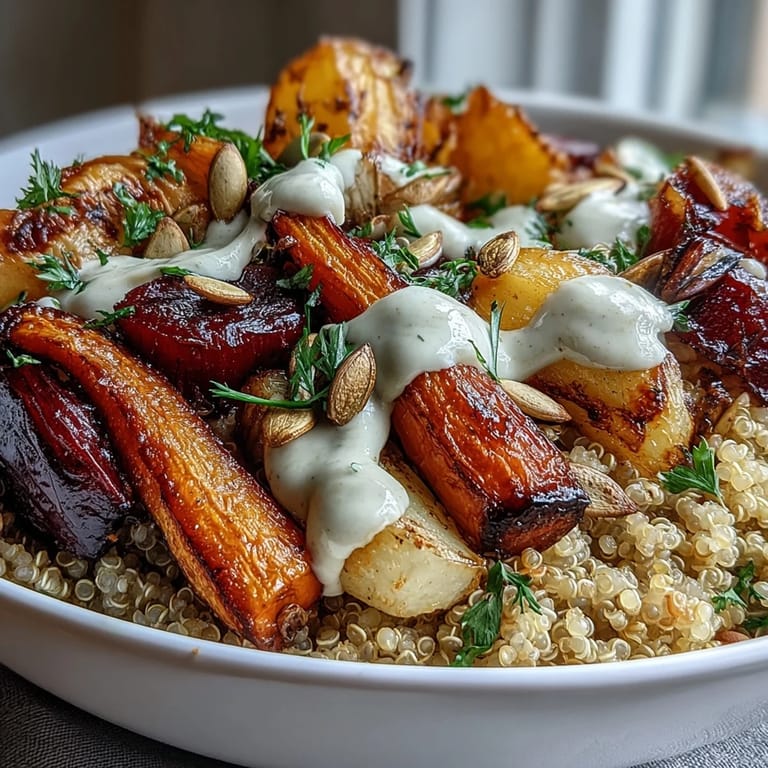
Save This bowl reminds me that some of the most nourishing meals are also the simplest, asking nothing of you but good ingredients and a little patience. Make this when you need to feel good from the inside out.
Recipe FAQs
- → Which root vegetables work best for roasting?
Carrots, beets, turnips, and parsnips are excellent choices. Sweet potatoes and rutabaga also roast beautifully, adding natural sweetness and hearty texture to the bowl.
- → How do I achieve perfectly caramelized vegetables?
Spread vegetables in a single layer on the baking sheet without overcrowding. This allows hot air to circulate properly, creating golden, caramelized edges while ensuring tender interiors.
- → Can I make this bowl ahead of time?
Absolutely. Roasted vegetables and cooked quinoa store beautifully in the refrigerator for up to 4 days. Keep the tahini sauce separate and add fresh garnish when serving.
- → What substitutions can I make for quinoa?
Farro, brown rice, or barley work wonderfully as alternatives. These grains add nutty flavor and satisfying chew that pairs well with roasted vegetables.
- → How can I add more protein to this bowl?
Chickpeas, lentils, or a poached egg make excellent protein additions. Crumbled feta or roasted chickpeas added during the last 10 minutes of roasting also work beautifully.
- → Why does my tahini sauce sometimes separate?
Tahini naturally separates. Whisk vigorously with warm water first, then add lemon juice and garlic gradually. The sauce should become smooth and creamy.